
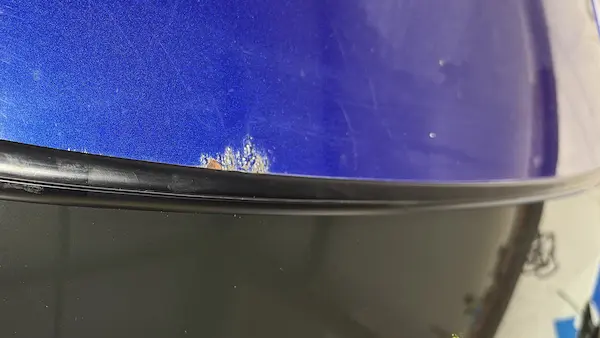
Maybe you noticed a little water getting in after a hard rain. Maybe you spotted a small rust bubble near the edge of the windshield and figured it was something to keep an eye on. Maybe you are getting a quote on a new windshield and you know there is some rust there, but it does not look that bad from the outside.
That is exactly where most of these conversations start.
What I want to do here is explain what is actually happening when rust shows up around a windshield — what it means for the bond, what it means for the car, and why this is worth taking seriously before it becomes a much larger problem. The windshield leak and the rust are almost always connected. One leads to the other, and by the time the leak is obvious, the rust has usually been working for a while.
Why the Windshield Matters More Than Most People Realize
The windshield is not just a piece of glass. It is a structural component of the vehicle.
In a rollover accident, the windshield contributes up to 65 percent of the roof's strength. The passenger airbag is designed to deploy against it — the bag inflates, contacts the windshield, and redirects toward the passenger. That only works correctly if the windshield is properly bonded to the car.
If the bond has failed, the windshield is not doing either of those jobs. That is not a scare tactic — it is just what the windshield is engineered to do, and why a failed bond is a safety issue, not just a leak.
How Rust Gets There in the First Place
Almost every case of rust around a windshield traces back to a previous installation that was not prepped correctly.
When a windshield is removed, there is always some risk of scratching the pinch weld — the metal surface the glass bonds to. You are working with blades and tools in tight spaces, and scratches happen. That is not the problem. The problem is what happens after. If the exposed metal is cleaned, decontaminated, and primed correctly, you are fine. If it is not, you now have bare metal sitting under a bonded piece of glass. Moisture gets in, corrosion starts, and it spreads — out of sight, under the paint — sometimes for years before anything shows on the surface.
By the time you see a bubble in the paint or notice water getting inside the car, the rust has usually already been moving for a while.
A 2004 Chevy Monte Carlo That Nobody Knew Was Dangerous
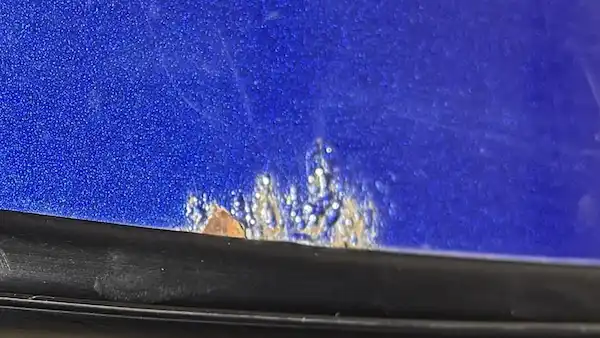
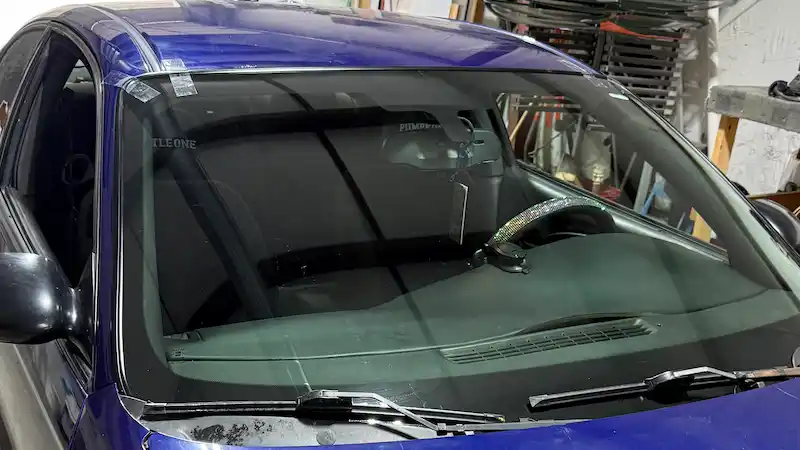
A customer brought in a 2004 Chevy Monte Carlo not long ago. They had just purchased it. They were not coming in about rust or a leak — they simply wanted a new windshield. From the outside, there was one small rust bubble near the top molding. Nothing that looked urgent.
When the molding came off, the gap it left behind told a different story. There was enough corrosion visible that I wanted to check the glass before cutting anything. I had someone apply upward pressure on the windshield from underneath.
It moved. Not slightly — an inch or more in one spot. We worked across the length of the glass. Slightly more resistance toward one end, but there was no question about what we were looking at. That windshield was not bonded to the car. It was essentially resting in place, held by the molding and not much else.
Eight seconds. The molding is already off. Watch what happens when upward pressure is applied to the glass. This windshield was approximately 40% bonded to the vehicle.
These were people who had just bought this car. They had probably not driven it in the rain yet. They came in for a routine windshield replacement and had no idea the glass was not properly attached. If that car had been in a serious accident, the windshield would not have performed the way it was designed to.
That is what a failed bond actually means.
What Was Hiding Under the Glass
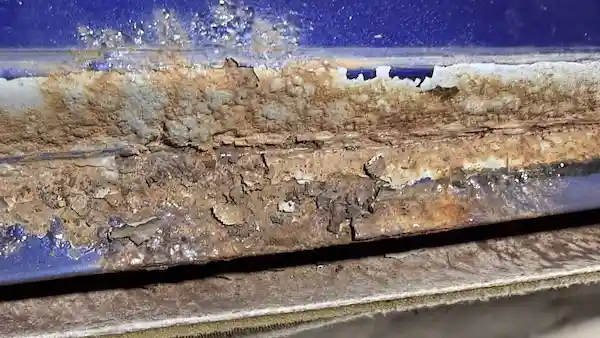
Once the windshield was out, the full extent of the corrosion was visible. It had spread well beyond what the paint bubble had suggested — which is almost always the case. Rust travels under the paint, and the surface bubble is just where it finally breaks through. The pinch weld, the metal surface the glass bonds to, had been corroding long before anyone could see it.
Here is what the three main areas of the car looked like at each stage of the repair — as found, during cleanup, and after primer was applied.
Passenger Side Upper Corner
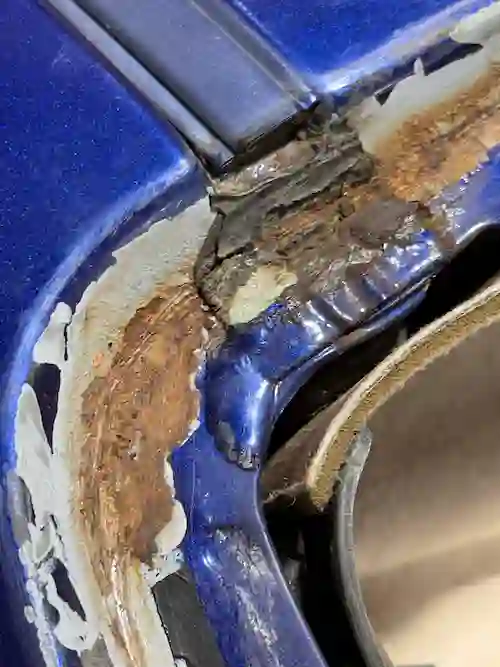
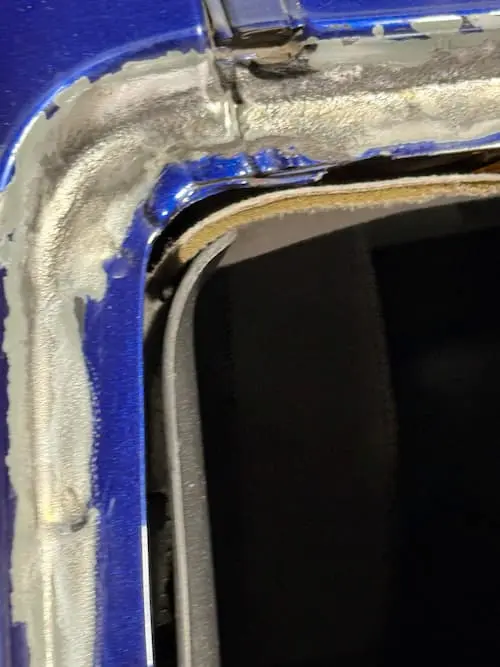
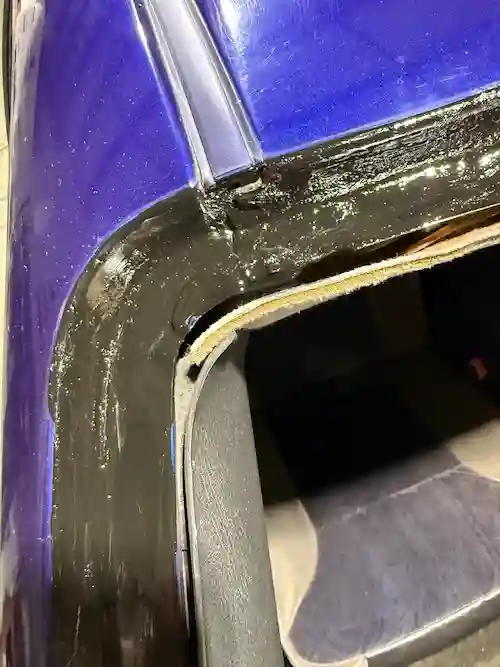
Driver Side Upper Corner
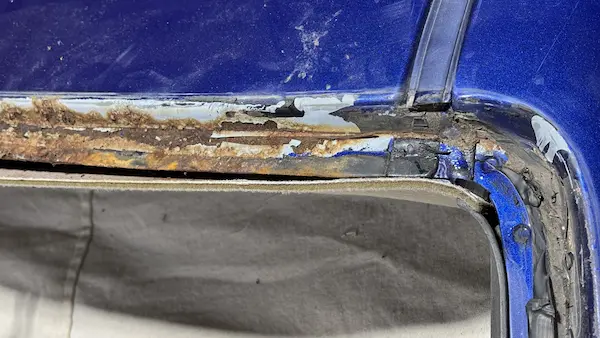
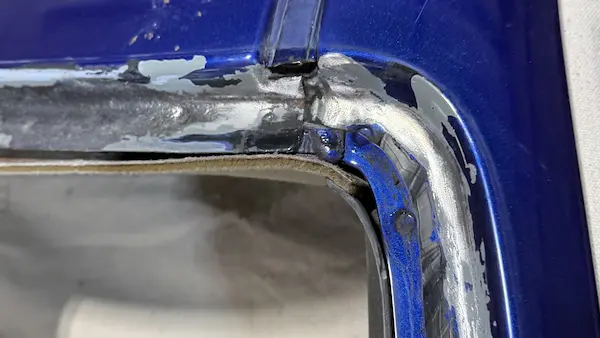
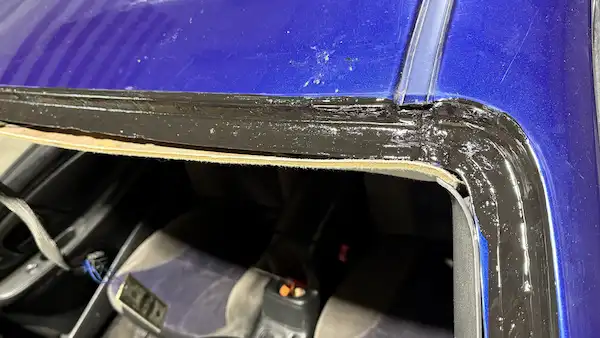
Top Rail
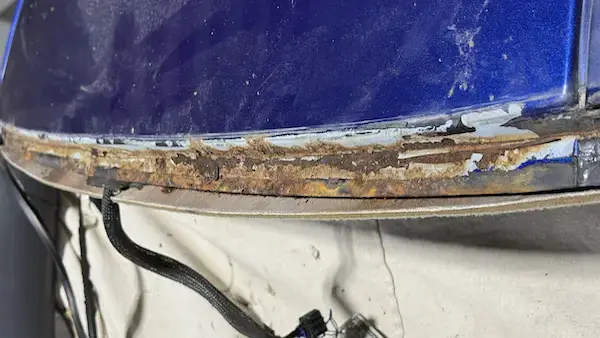
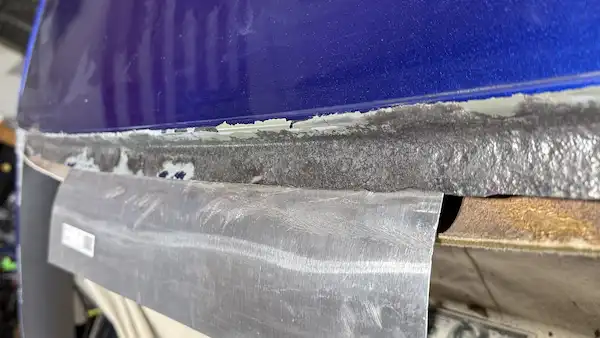
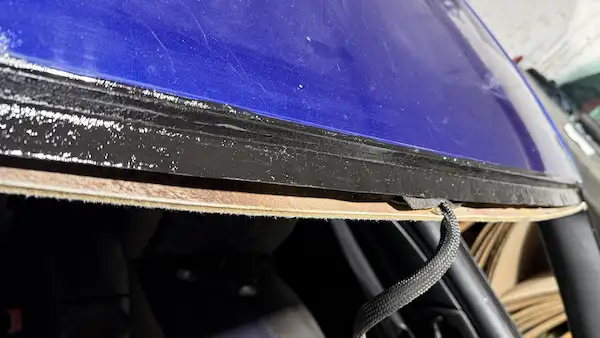
A note on the cleanup photos: these were taken during the process, not at completion.
Whether the Job Can Move Forward
Finding rust does not automatically mean the job cannot be completed. What matters is the condition of the metal itself. I test it — tap it, work it, check what is actually there. If the metal is solid underneath, I can grind the corrosion back to bare metal, clean and prep the surface properly, and install the new glass on a bonding area that is ready for it.
Where I stop is rot. If there are holes, if the metal has thinned past the point of integrity, or if the corrosion has spread beyond what can be safely addressed, I will not proceed with the installation. There is no version of this job where glass gets bonded into metal that cannot support it. If a vehicle reaches that point, it needs metalwork from a body shop before the glass can be safely replaced. I will tell you that directly, and show you what I am seeing.
On this Monte Carlo, the metal was still solid. We prepped it correctly and completed the installation. The customers had just bought the car — they came in nervous and left relieved.
What I Will and Will Not Promise About Rust
If I can remove all of the corrosion down to clean, solid metal, I am comfortable standing behind that work long term.
If the rust has spread into the painted body panel — beyond the pinch weld, into areas I cannot fully address — I will tell you clearly: it will come back. Not might. Will. Rust does not stop on its own once it is moving under the paint. What I can do in that situation is make the bonding surface safe, give you a properly installed windshield, and buy you time while the larger repair gets sorted out. But I am not going to let anyone leave thinking a problem is resolved when it is not. You will know exactly what was addressed and what was not, with photos to back it up.
Signs Worth Paying Attention To
These are the things that suggest rust around the windshield may already be an issue:
- Paint bubbling or lifting near the windshield edge or along the molding
- Visible rust at the trim line
- Water getting inside the vehicle after rain
- A damp headliner or a moisture smell with no obvious source
- An older vehicle with previous windshield replacement history
None of those automatically means the vehicle is in serious trouble. Some turn out to be minor — a small area of surface corrosion that cleans up quickly. Some are more involved. The point is that they are worth knowing about before new glass goes over the top of whatever is underneath.
The same issue can show up on bonded side glass and rear glass as well. Any glued-in glass involves a pinch weld, and any pinch weld that was scratched and left unprimed during a prior installation is a candidate for the same kind of problem. It also comes up regularly on commercial fleet vehicles that have been worked hard and had prior glass work done.
The Bottom Line
Rust around the windshield is not a cosmetic issue, and a leaking windshield is not just an inconvenience. The bond matters for how the car holds up in a crash and how the airbags perform. If the bond is failing — and rust is usually why it fails — that is worth addressing before something makes it matter.
If your vehicle has water getting in, paint bubbling near the glass, or prior windshield work you are not confident was done correctly, the best next step is to have it looked at in person. You can reach us through the contact page or give us a call. Photos can help give a general idea of what we may be looking at, but the real picture does not show up until the glass comes out.
★★★★★ Read what our customers have to say on Google 5.0 rating · as of September 2026Serving Omaha, Bellevue, Papillion, La Vista, Ralston, Millard, Council Bluffs, and nearby communities.