
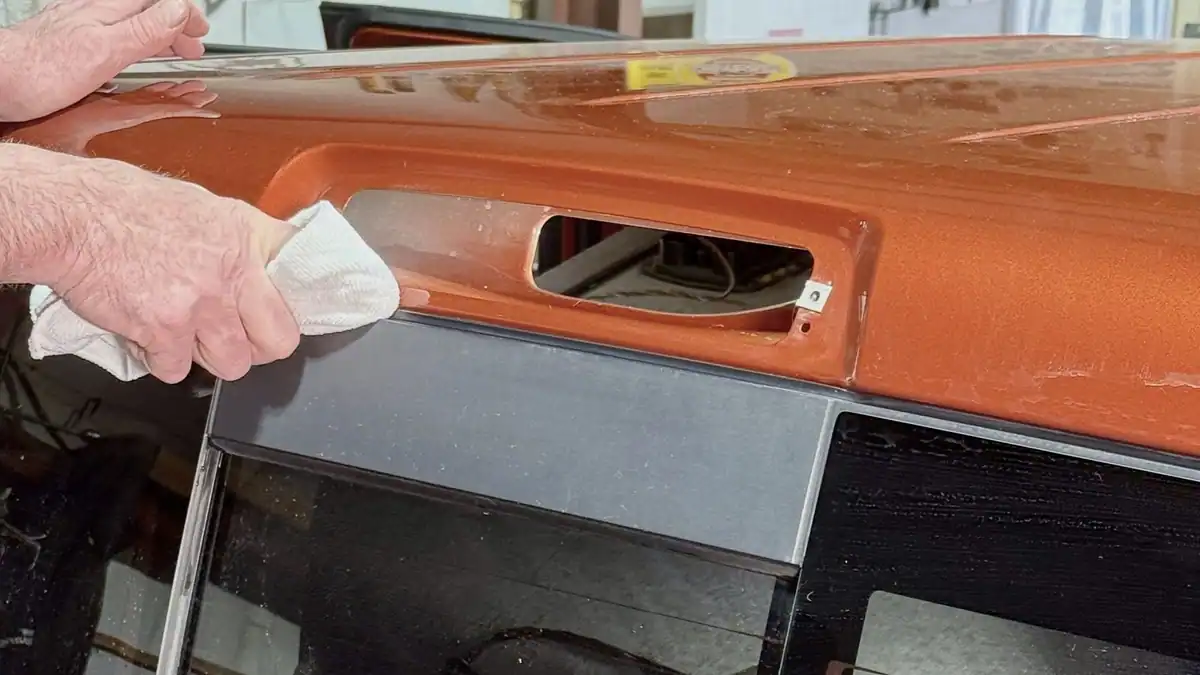
Water stains on your headliner or interior trim are never cosmetic. They're evidence of an active water intrusion issue.
In this vehicle, water was traveling through the roof structure and body channels long before it became visible inside. By the time staining appears on fabric or trim, moisture has usually already saturated insulation and interior materials.
Two Things Most People Don't Realize About Vehicle Leaks
Leaks rarely come from just one source. And water almost never drips straight down from where it enters.
Modern vehicles have layered roof panels, drain channels, wiring pathways, and structural cavities. Once water gets inside, it follows the path of least resistance — which can carry it several feet from the actual entry point. That's why guessing, or sealing the most obvious spot, often doesn't solve the problem.
Interior discoloration is a symptom. Not the cause.
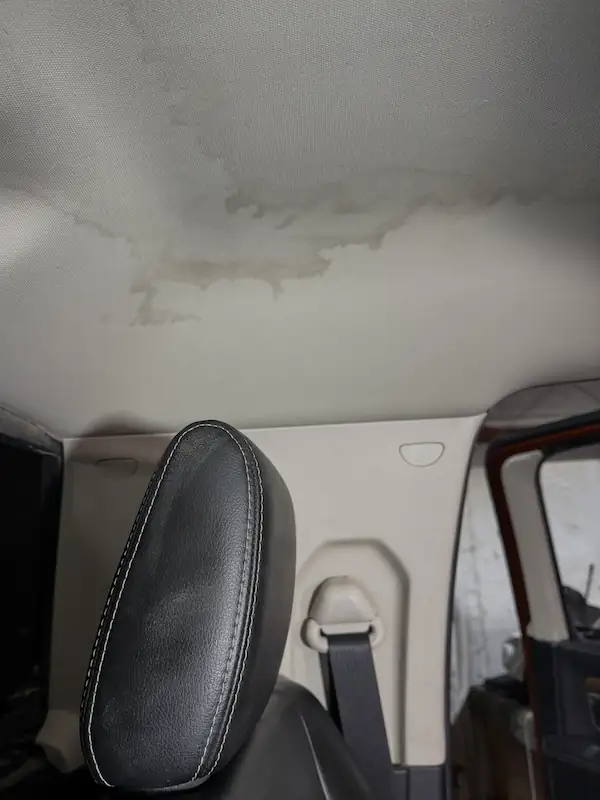
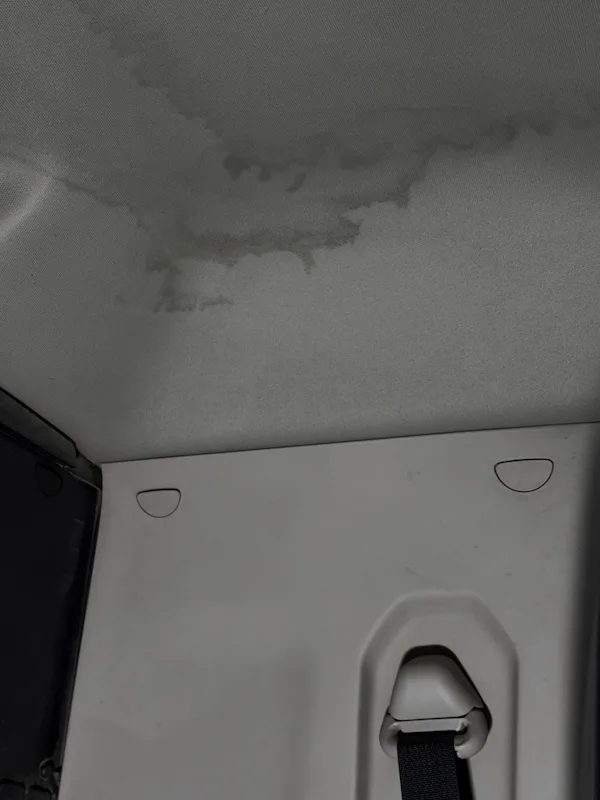
When customers see water near the rear window, the immediate assumption is that the back glass seal has failed. From inside the cab, that's exactly what it looks like.
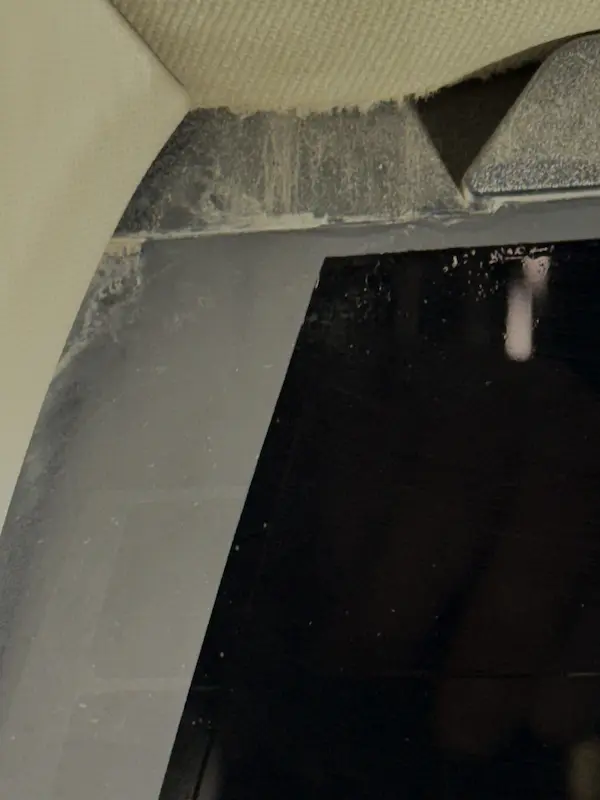
But leaks are deceptive. Before replacing or resealing anything, the actual source needs to be confirmed — not assumed.
What the Water Test Showed
We ran a controlled water test on the back glass area. What we saw looked like a textbook glass seal failure — water was tracking in across the entire width of the rear window from the inside.
Active water entry during a controlled test — not condensation. This is what a failed rear taillight gasket looks like from inside the cab.
In this case, water was appearing across the upper rear glass area — which normally points directly to a back glass seal failure. But before resealing or replacing anything, we confirmed the source by exposing the interior structure.
That means:
- Removing interior trim panels
- Lowering sections of the headliner
- Inspecting roof channels and drain pathways
- Tracing the actual water path — not just the visible symptom
Once water enters the roof cavity, it doesn't fall straight down. It travels along seams, factory channels, weld points, and structural reinforcements before finally surfacing where gravity allows. That surface point is rarely the entry point.
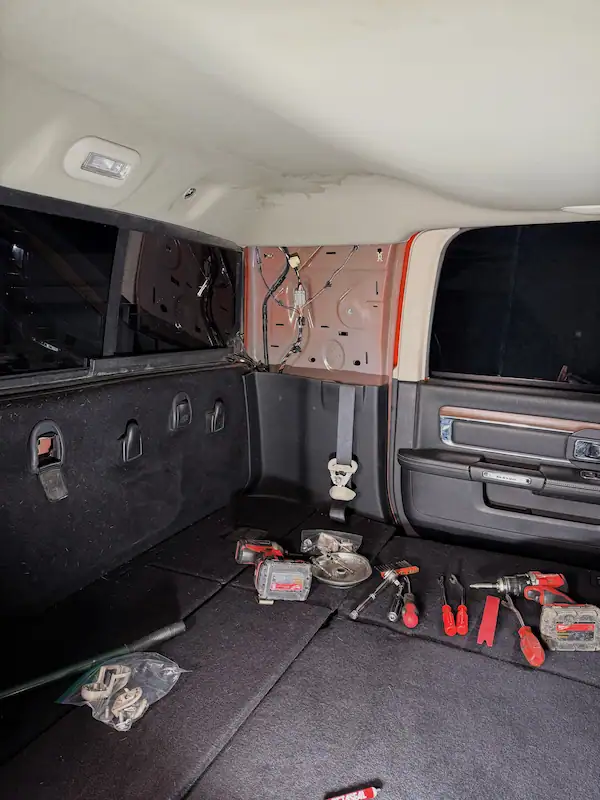
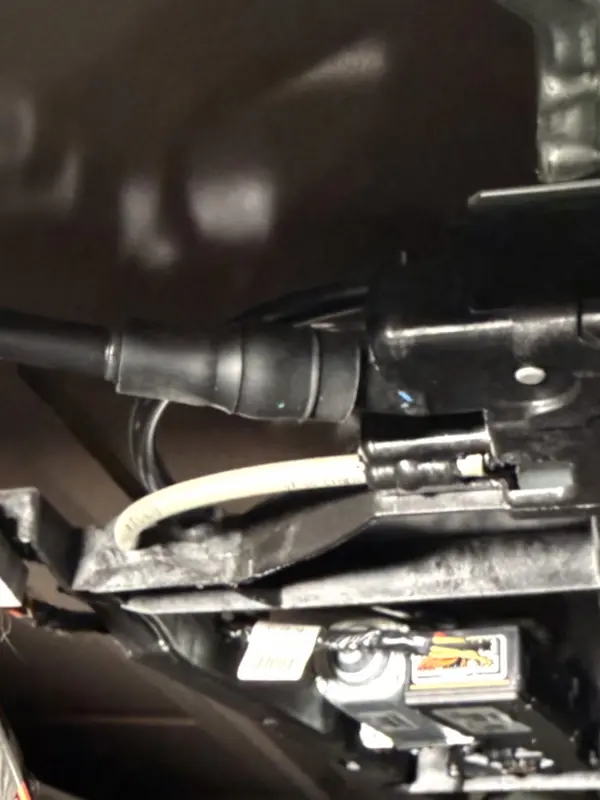
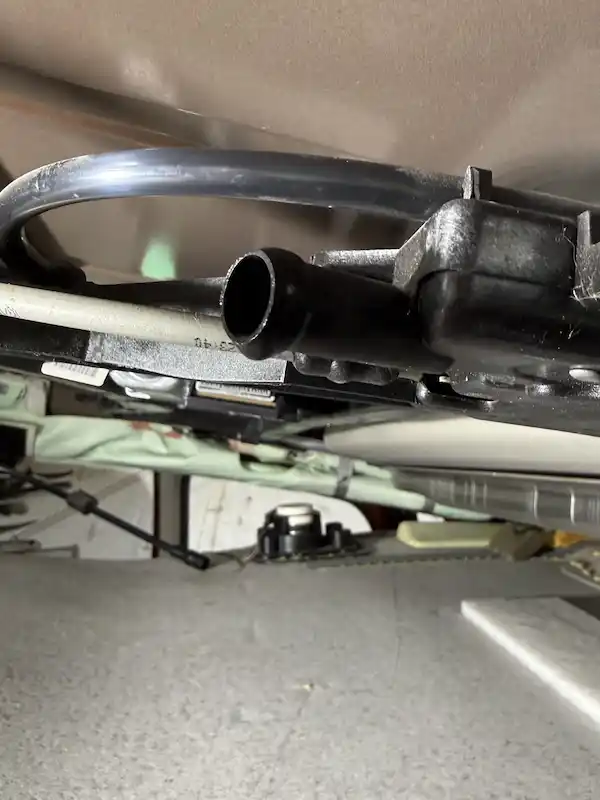
This is why proper leak diagnosis requires disassembly and inspection — not guesswork, and not sealing the most obvious location.
What We Actually Found — Two Separate Failures
The first issue was a clogged rear sunroof drain. Any moisture that passes the glass is supposed to flow into drain channels and exit between the back of the cab and the truck bed. In this case, the rear drain tube was clogged — instead of draining properly, water backed up and overflowed into the roof cavity. That alone can cause interior staining. But it wasn't the primary source.
The main intrusion point was a failed rear taillight gasket located above the back glass area. Once that seal deteriorated, water entered behind the taillight assembly, traveled through the structure, and surfaced inside the vehicle far from where it actually entered.
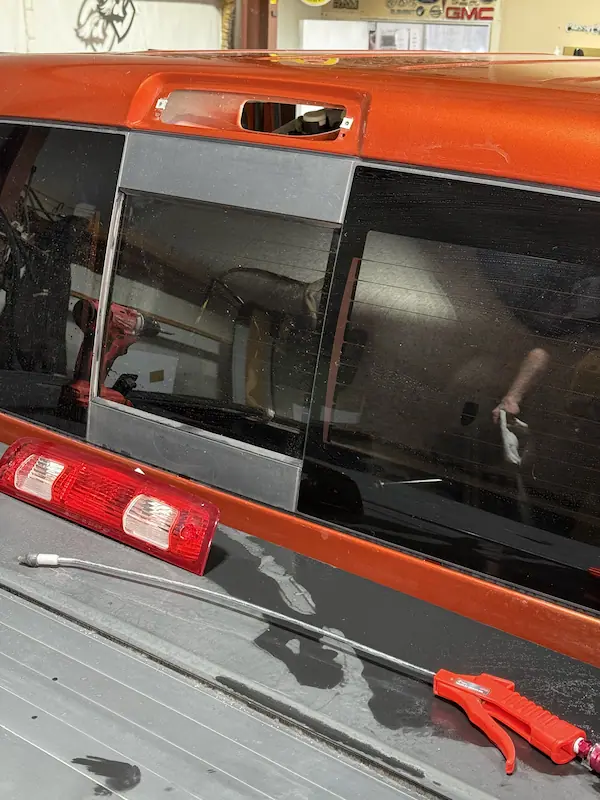
We removed the taillight assembly, cleaned the mounting surface, and fabricated a replacement gasket using marine-grade EPDM rubber — a material designed for weathertight sealing in all climates. Nebraska temperatures swing from below zero in winter to well over 100°F in summer. EPDM remains flexible from -40°F to 140°F, maintaining a long-term seal without shrinking, hardening, or cracking.
We also cleared the drain line completely to restore proper water flow through the rear channels.
This Isn't a Ram Problem — It's a Pickup Truck Problem
A failed rear taillight gasket causing interior water intrusion is one of the most commonly misdiagnosed vehicle leaks. It shows up in Rams, Silverados, F-150s, Sierras, Tacomas — essentially any pickup where the third brake light or upper taillight assembly is mounted near the top of the cab. The symptom always looks like a back glass leak. The source usually isn't.
If you're seeing staining, dampness, or unexplained moisture inside your truck, it's worth having it traced correctly before it leads to mold, corrosion, or electrical damage.
Learn more about car and truck water leak diagnosis and repair at 123 Glass Company →
★★★★★ Read what our customers have to say on Google 5.0 rating · as of September 2026Serving Omaha, Bellevue, Papillion, La Vista, Ralston, Millard, Council Bluffs, and nearby communities.