
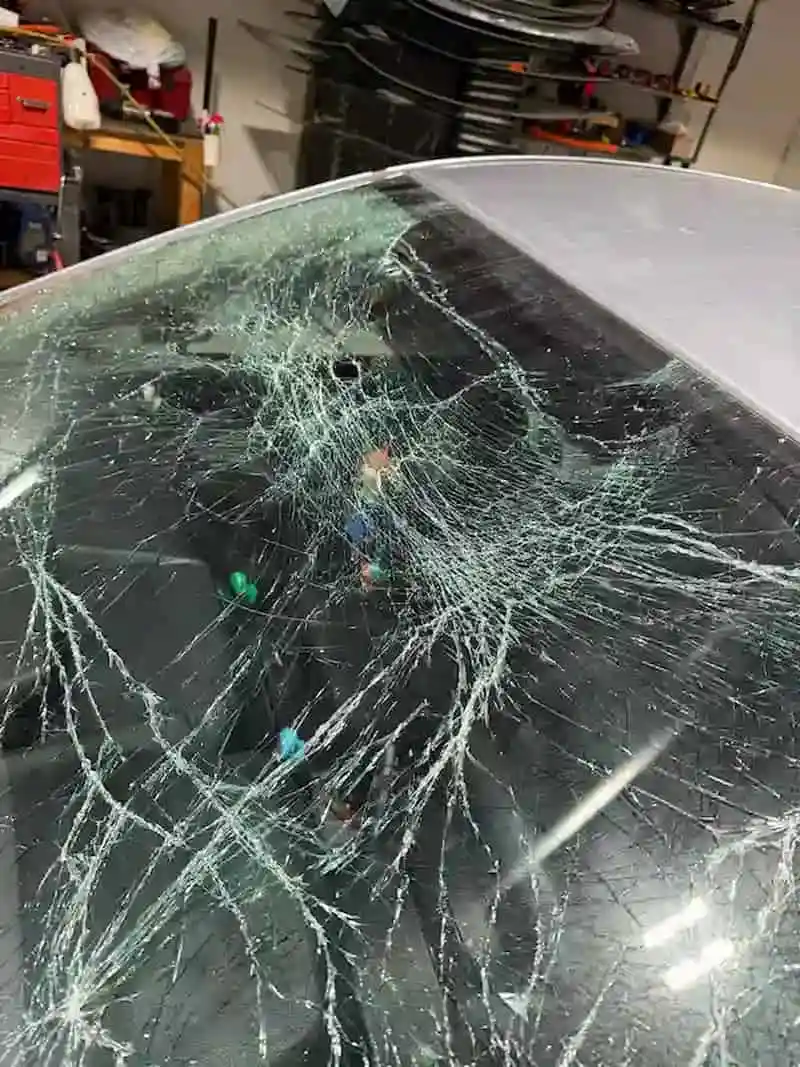
Picture this: you are on the interstate, doing 60 mph, traffic all around you — and without any warning, the hood comes up and covers your windshield. You cannot see anything. You have no idea what is in front of you, beside you, or coming up behind you. It is like someone threw a blanket over your face at highway speed.
That is what happens when a hood lets go on the road. And it happens because the hood looked closed — but it was not actually latched.
This is not a freak accident. We see it about once a month. It is never on a side street at 25 mph. It is always the interstate, always highway speed, because that is when the air pressure underneath finally overcomes a hood that was down but not fully seated. The person who drove in here was lucky to walk away from it. Not everyone does.
The difference between a closed hood and a latched hood is one tug. If you pull up on the hood after you close it and it does not move, you are latched. If it lifts — even slightly — it is not.
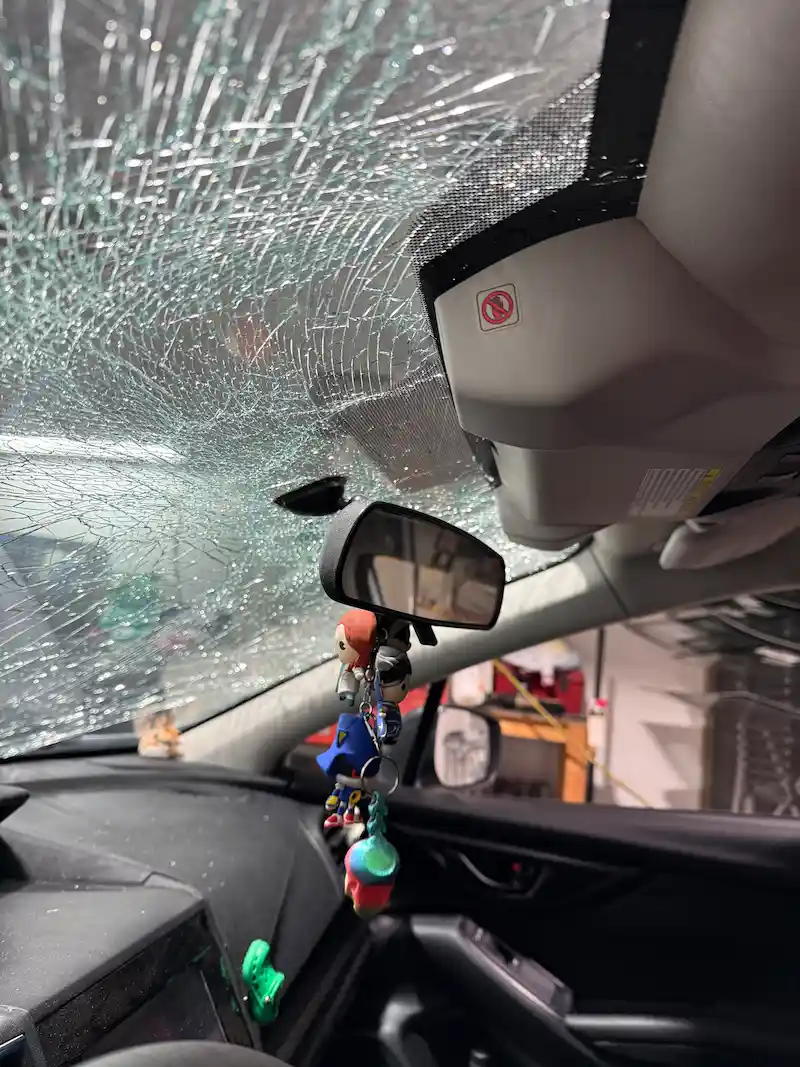
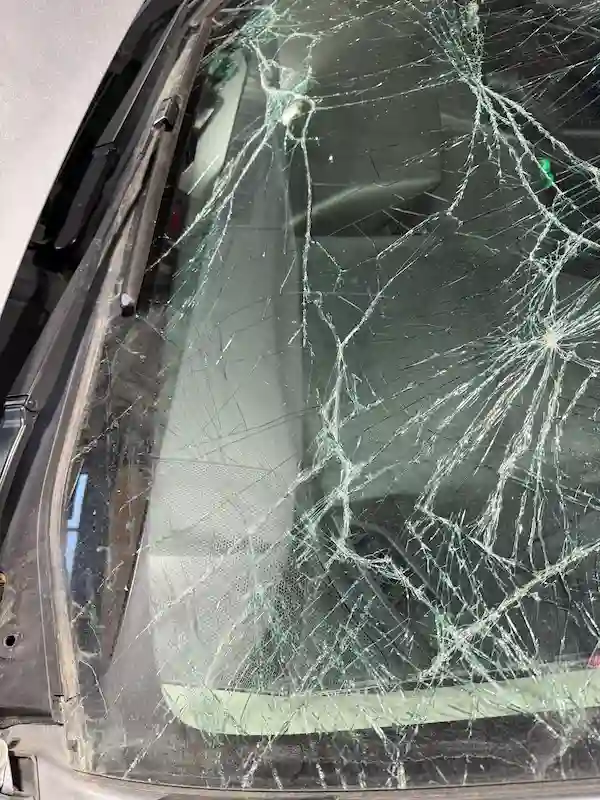
The windshield in these photos is laminated safety glass. When it takes an impact like this, it does not break into large chunks — that is the point of the lamination. But it does release small shards and chips and you can absolutely get covered in fragment. The glass is designed to protect you, and it does — but this is not a situation anyone should be in.
This Particular Car
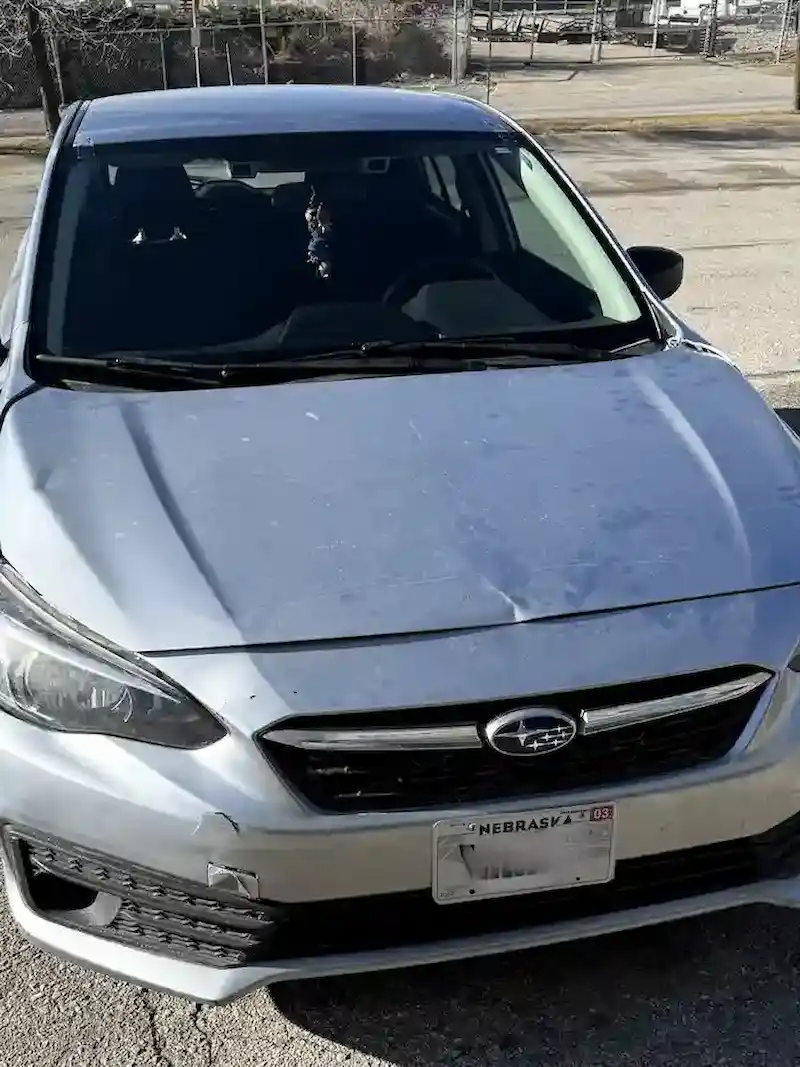
This was a Subaru Impreza. The hood was not fully latched when the owner got back on the road. By the time it let go, they were at highway speed. I am glad they made it here.
The damage was significant. The windshield was gone. The impact also bent the cowl area at the corner where the hood meets the windshield frame, and there was body damage along the passenger's side and at the front bumper from where the hood had come up and caught the car on the way over.
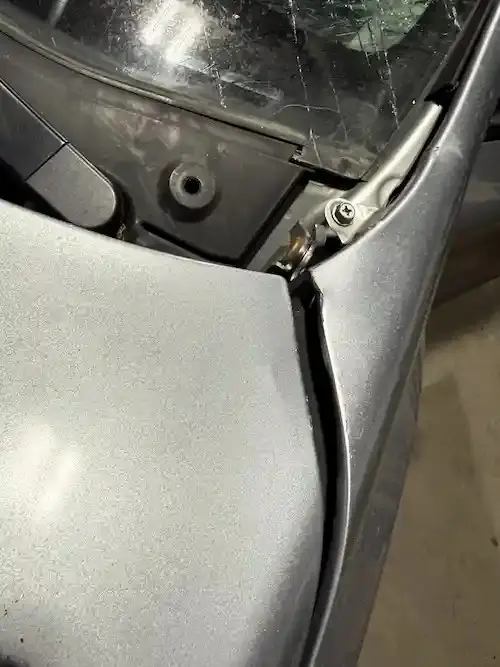
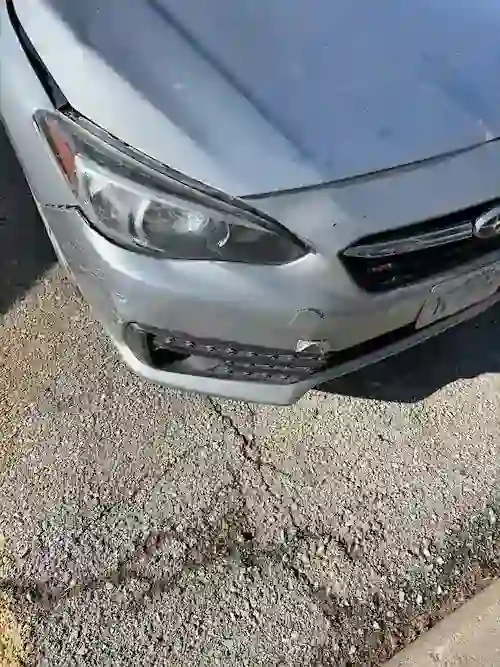
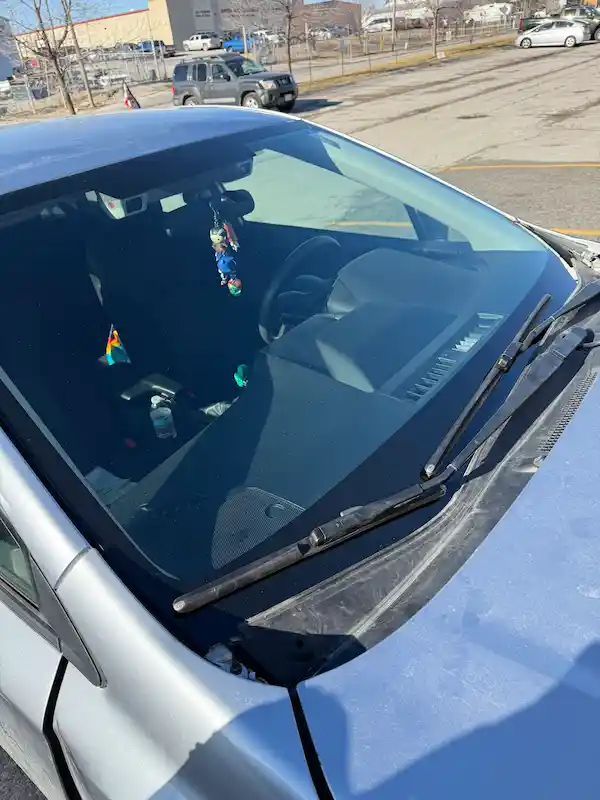
I pulled the destroyed windshield out, cleaned the little shards of glass everywhere , and put a new one in. The car was equipped with "Eyesight", a Subaru specific ADAS safety system with a camera mounted at the top of the windshield. The hood hit it directly, so the camera needed to be checked and likely replaced after the windshield replacement. I refered them to Subaru for that.
After the Replacement
This is what it looked like when we were done. The body damage is still there — that goes to a body shop. But the glass is in, the view is clear, and the car is drivable again.
The One Thing That Prevents All of This
After every car leaves my shop, I close the hood and pull up on it. That is it. If it does not move, it is latched. If it lifts at all, it goes back down and gets checked again. Takes two seconds.
The hood on your car has a two-stage latch. When you push it down from open, it catches on the first stage — that is what makes it feel closed. To fully latch, it has to engage the second stage, and sometimes it does not quite get there. The hood sits flush. It looks fine. You cannot tell from looking at it. But at highway speed, that first stage is not enough to hold it.
Any time you have been under the hood — oil, coolant, air filter, anything — close it and then give it a firm upward tug before you pull out of the driveway. If it holds, you are done. If it lifts, close it again and make sure it seats all the way.
That is the whole habit. It takes almost no time, and it is the only thing standing between a routine fluid check and a call to an auto glass shop from the side of the interstate.
★★★★★ Read what our customers have to say on Google 5.0 rating · as of September 2026Serving Omaha, Bellevue, Papillion, La Vista, Ralston, Millard, Council Bluffs, and nearby communities.